Boat Kill Switches Save Lives
What 2026 Boating Accidents Teach Us About Engine Cutoff Devices

One of the simplest pieces of safety equipment on your boat may also be one of the easiest to ignore.
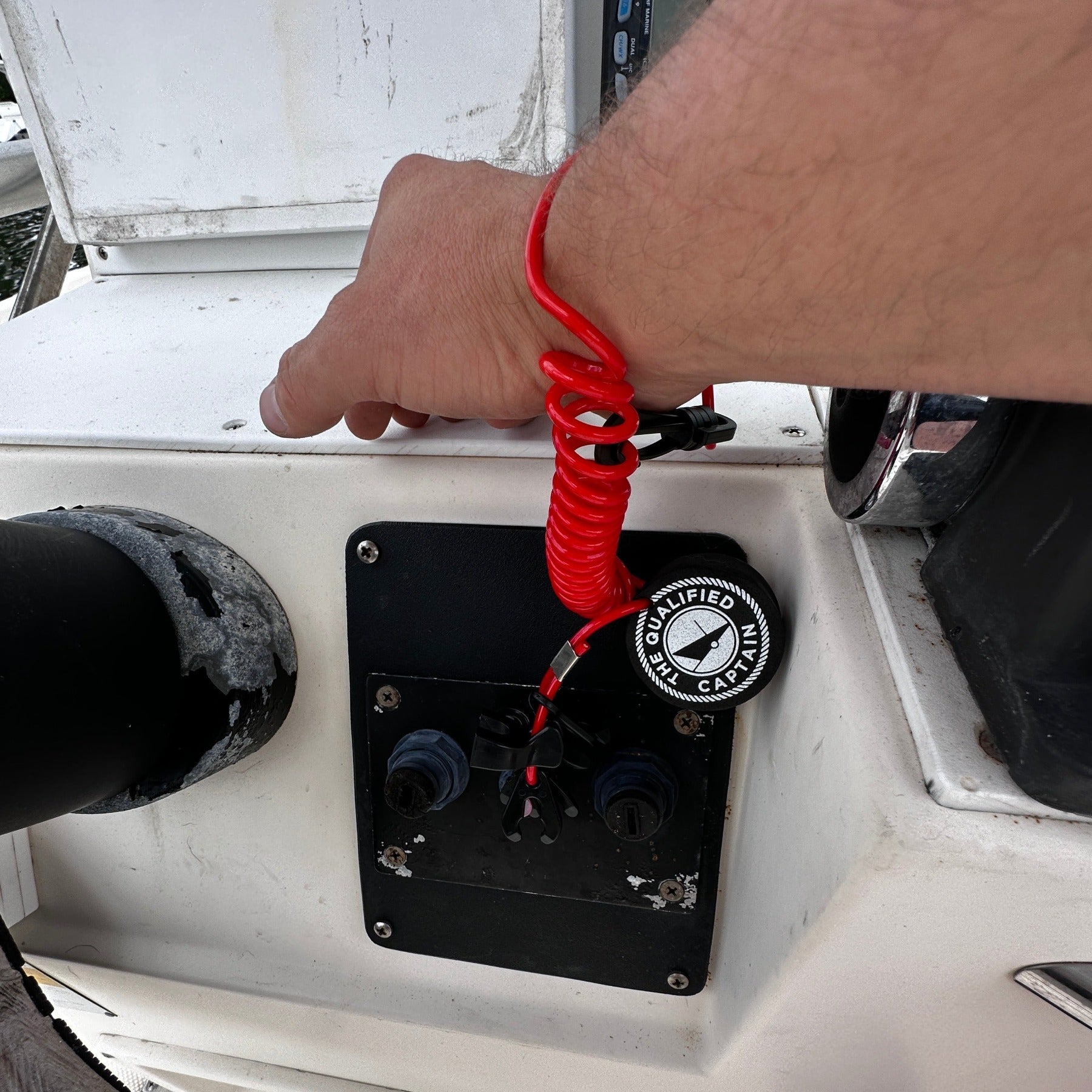
It's the engine cutoff switch—the small red coiled lanyard commonly called a kill switch.
Most boaters know what it is. Many know they're supposed to wear it. But spend a day on almost any busy waterway and you'll see plenty of operators underway with the lanyard dangling from the throttle instead of attached to them.
The problem is that you don't get to choose when you're going to be thrown from a boat.
A submerged stump. A floating object. Another boat's wake. A sudden turn. A steering problem. A collision.
Any of these can separate an operator from the helm in seconds.
And several boating accidents during 2026 provide powerful examples of what can happen next.
A Tragic Reminder on the Mississippi River
On October 3, 2026, authorities responded to a single-boat accident on the Mississippi River near Massey Marina in Iowa.
According to the Iowa Department of Natural Resources, the boat reportedly struck a floating object at approximately 3:00 p.m. All three people aboard were ejected. A nearby boat rescued one occupant, but two men were recovered and pronounced dead at the scene. The accident remains under investigation. Two dead after boating accident…
We don't yet know whether an engine cutoff switch was being used, what happened to the boat after the occupants were ejected, or whether an ECOS would have changed the outcome. It would be irresponsible to suggest otherwise.
But the accident demonstrates something every boater needs to understand:
You can be ejected from a boat without warning. You don't have to be racing. You don't have to be performing a dangerous maneuver. Something as simple as striking an unseen or floating object can instantly turn a normal day on the water into an emergency. That's exactly why safety equipment needs to be worn before the accident happens.
Lake Tawakoni: When the Boater Did it Right
Fortunately, we also have a 2026 accident that demonstrates what happens when a boater prepares for that possibility.
In July, a fisherman participating in a tournament on Lake Tawakoni, Texas, struck a submerged stump and was thrown from his boat.
His name was Steven Otto. Otto ended up alone in the lake while search crews tried to locate him. He spent more than three hours in the water before Texas Game Wardens spotted him through binoculars and rescued him.
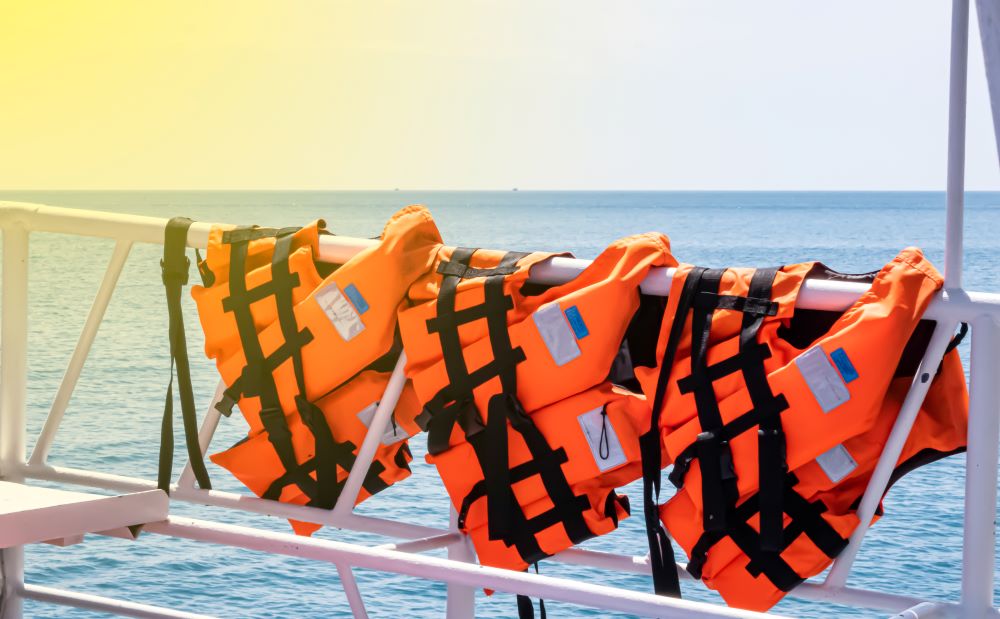
But Otto had made two important decisions before the accident occurred. He was wearing his life jacket. And he was connected to his boat's emergency engine cutoff switch.
View Story Here
Texas Game Wardens specifically credited those two pieces of safety equipment with helping save his life and posted a simple message afterward: “Always wear a life jacket and use your engine cut-off switch. They only work if you use them.”
That is about as good a boating-safety message as you'll ever hear. Fox 4 News
Think about what happened. Otto didn't anticipate hitting the stump. He didn't have time to grab a life jacket as he was being thrown overboard. He didn't have time to reach over and shut down the engine. He had already prepared for the emergency. That's the point.

What Happens When the Operator Isn't Connected to the Kill Switch?
An engine cutoff switch is remarkably simple.
The U.S. Coast Guard defines an Engine Cut-Off Switch, or ECOS, as a safety mechanism designed to shut down a boat's propulsion machinery when the operator is displaced from the helm.
The operator connects to the system using an Engine Cut-Off Switch Link (ECOSL). Traditionally, that's the familiar coiled lanyard attached to the operator's clothing or PFD, although wireless electronic systems are also available.
If the operator is thrown away from the helm, the connection is broken and the engine shuts down. USCG Boating
Without it, the engine may keep running.
And that's where a bad accident can become much worse.
Lake Demopolia: The Boat Came Back
A May 2026 accident on Lake Demopolis in Alabama demonstrates one of the most frightening possibilities. A 70-year-old man was operating an 18-foot Bass Tracker when he was thrown from the boat.
Investigators reported that he wasn't wearing a PFD and wasn't using the boat's emergency cutoff switch. After the operator entered the water, the boat continued underway.
It eventually struck its own operator. He was taken to a hospital, where he died from his injuries. https://www.wsfa.com
This is exactly one of the scenarios an engine cutoff switch is designed to prevent.
When an operator leaves the helm but the engine continues running, steering torque or the position of the wheel can cause the boat to begin circling. The person who was just thrown overboard may now be in the path of his or her own boat—and its spinning propeller.important navigation tool.
Georgian Bay: Another Runaway Boat Circles Back
A remarkably similar accident occurred on Georgian Bay in Ontario in May.
A 57-year-old operator was ejected from his boat near Brandy's Island.
The boat didn't stop. Instead, it continued traveling in a circular pattern and eventually came back around and struck the operator in the water. Fortunately, this story had a much better ending. The man survived and was treated for minor injuries, and emergency responders eventually stopped the runaway vessel. OrilliaMatters.com
But the incident demonstrates just how quickly an operator can go from driving a boat to becoming a target in the water.
St. Johns River: A Runaway Boat Threatens Everyone Else
An engine cutoff switch doesn't just protect the person operating the boat. It protects everyone around that boat. That became painfully obvious during a June training exercise involving Putnam County Sheriff's Office marine units on Florida's St. Johns River. According to an FWC accident report described by local media, a deputy operating a patrol boat crossed another vessel's wake, overcorrected the steering and was thrown from his boat.
Investigators reported that he wasn't wearing the vessel's kill switch. The unmanned patrol boat continued running and began spinning in circles.
Other deputies rescued the operator and then attempted to stop the runaway boat because it posed a danger to the public. During those efforts, another patrol boat became disabled and drifted into the runaway vessel's path. The unmanned boat crashed into it. Three other deputies were injured. WJXT
Had the engine shut down immediately when the operator was ejected, the sequence of events that followed could have been very different. That's an important lesson. Your kill switch isn't just about you.
The Coast Guard Had to Chase Down Another Runaway Boat
The Coast Guard dealt with another dramatic example this summer on Maryland's Severn River.
An operator was separated from the helm, leaving the boat running without anyone in control. Coast Guard personnel ultimately had to intercept the runaway vessel and stop it. Their assessment afterward couldn't have been much clearer: “This is the result if you don't wear your kill switch.”
The Coast Guard emphasized that engine cutoff switches are designed specifically to prevent runaway boats from injuring other boaters or running aground. MyCG
Imagine being the person who has just fallen overboard and watching your boat continue across the water without you. Now imagine other boats, swimmers, docks or children in its path. That's why clipping on an ECOS shouldn't be viewed as an inconvenience.
What Federal Law Requires
There's another reason many boaters should be using their engine cutoff device: It's federal law.
Since April 1, 2021, operators of covered recreational vessels equipped with an engine cutoff switch are required to use the ECOS link while operating on plane or above displacement speed on navigable waters of the United States.
Generally, the requirement applies to motorized recreational boats less than 26 feet long with three or more horsepower when equipped with the required ECOS. USCG Boating
But whether the law applies to your particular boat shouldn't be the deciding factor.
The better question is: If my boat has an engine cutoff switch, why wouldn't I use it?
A Kill Switch and PFD Do Different Jobs
The Lake Tawakoni rescue also illustrates another point we emphasize constantly at The Qualified Captain.
A life jacket and engine cutoff device aren't substitutes for one another. They work together.
If you're unexpectedly thrown from your boat:The ECOS helps stop the boat. The PFD helps keep you afloat. One doesn't replace the other.
The Coast Guard warns that an unmanned boat may begin traveling in circles near the point where the operator was ejected, creating the risk of a propeller strike. Immediately stopping the engine can remove that danger and may allow the operator to get back to the disabled boat. USCG Boating
That's exactly why the Texas Game Wardens' Lake Tawakoni message is so important. That fisherman didn't merely have a life jacket aboard. He was wearing it. He didn't merely have an engine cutoff switch installed.
He was using it. There's an enormous difference.
“I'm an Experienced Boater”
Experience doesn't make you immune from physics. You can't see every submerged object. You can't predict every wake. You can't anticipate every mechanical failure. You can't guarantee another boater won't make a mistake. And you certainly can't count on having enough time during an ejection to reach back and turn off your engine.
The accidents we've seen this year involve different waterways, different boats and different circumstances. But they repeatedly demonstrate the same vulnerability: An operator can be separated from the helm in an instant.
Make It Part of Your Start-Up Routine
The solution doesn't require expensive electronics or advanced seamanship.
Make clipping into your engine cutoff switch part of your normal starting procedure.Start the engine. Put on your PFD. Attach the ECOS. Check your surroundings. Get underway.
After you've done it enough times, operating without that lanyard attached should feel as strange as driving your truck without fastening your seat belt. And if the traditional coiled lanyard interferes with the way you operate your boat, investigate an appropriate wireless ECOS system rather than simply choosing not to use anything.
The Most Important Clip on Your Boat
Boating accidents don't send invitations. The operator on Lake Tawakoni didn't know there was a submerged stump waiting ahead of him. The three occupants on the Mississippi River didn't know their boat was about to strike a floating object and eject all of them.
The deputy on the St. Johns River didn't plan on being thrown from his patrol boat. That's why we prepare before something goes wrong. An engine cutoff device can't prevent every boating accident. It can't prevent you from being ejected, and it certainly can't guarantee you'll survive an accident.
But it can do something extremely important: It can stop the boat when you're no longer there to stop it yourself.The Coast Guard describes runaway vessels as threats not only to the ejected operator but also to other people in the water, nearby vessels and even the law-enforcement officers tasked with trying to stop them.
The evidence from this summer makes that danger very real. One operator was struck by his own boat and died. Another was struck by his circling boat and survived. A runaway patrol boat crashed into another patrol boat and injured deputies.The Coast Guard had to chase down another unmanned vessel. And on Lake Tawakoni, one boater did what we wish every boater would do :He wore his PFD. He connected his engine cutoff switch. And when the unexpected happened, his safety equipment was already working for him. So the next time you push away from the dock, don't leave that red lanyard hanging from the throttle. Clip it on.
Wear the PFD. Clip on the kill switch. Every time. Because you don't get to decide when you're going to be thrown from a boat. That's precisely why you put them on before you need them.
About The Qualified Captain
We provide engaging, NASBLA-approved online boating safety education designed to go beyond the minimum requirements. Through real-world accident analysis, practical navigation instruction, and lessons learned from actual boating incidents, our mission is to help recreational boaters make safer decisions before an emergency occurs. Click HERE to learn more.